ROYAL INITIATIVES &
FOUNDATIONS
EDUCATION &
YOUTH PROGRAMS
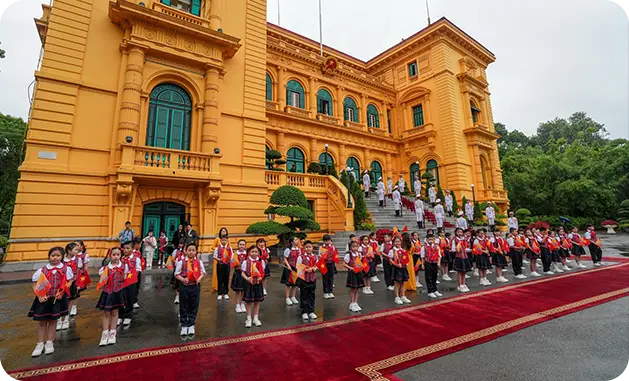
Bhutan’s education and youth programs include the national curriculum, the Bhutan Education and Skills Training (BEST) project for vocational training, and youth centers providing education and counseling. Organizations like Bhutan Youth focus on leadership and community development, while initiatives like the Youth Education Initiative aim to provide growth opportunities through innovative programs aligned with UN Sustainability Goals. The new Gyalsung National Service Program also provides a structured experience for youth.
FORMAL AND VOCATIONAL EDUCATION
GENERAL EDUCATION:
The formal education system includes free basic education (primary and lower secondary), with challenges in access and quality, particularly for girls, in higher education levels.
BHUTAN EDUCATION AND SKILLS TRAINING (BEST) PROJECT:
A five-year initiative (2022-2027) to enhance technical and vocational education and training (TVET) to make it more inclusive and relevant to the job market.
GYALSUNG NATIONAL SERVICE PROGRAM:
A recent national service program for youth.
COMMUNITY AND NON-FORMAL PROGRAMS
YOUTH CENTERS:
Established by organizations like Save the Children, these centers provide youth-friendly spaces with educational materials and conduct seminars on issues like unemployment and drug abuse.
BHUTAN YOUTH:
This organization focuses on leadership development, community service, and sustainable development through various programs.
YOUTH EDUCATION INITIATIVE:
This initiative provides innovative educational programs and opportunities for youth to foster leadership and align with the UN Sustainability Goals.
ENVIRONMENT & CLIMATE ACTION
Bhutan’s environmental and climate action is a comprehensive, multi-faceted strategy rooted in its philosophy of Gross National Happiness (GNH), which prioritizes environmental conservation alongside development. The country is the world’s first carbon-negative nation, a status achieved through a constitutional mandate to keep at least 60% of its land under forest cover, its extensive use of renewable hydropower, and its participation in initiatives like the Climate and Clean Air Coalition (CCAC). Bhutan’s actions include developing Low Emissions Development Strategies (LEDS) for various sectors, implementing the Kigali Amendment to phase out HFCs, and focusing on clean air, clean cooling, and improved waste management.
KEY STRATEGIES AND ACTIONS
CARBON-NEGATIVE STATUS:
Bhutan is a carbon-negative country, as its vast forests sequester more carbon dioxide (\(CO_{2}\)) than the country produces.
FOREST CONSERVATION:
A constitutional mandate requires at least 60% of the country's land to remain forested, creating a natural carbon sink.
RENEWABLE ENERGY:
Bhutan uses nearly 100% renewable hydropower for its electricity and exports the excess to neighboring countries, reducing regional emissions.
GROSS NATIONAL HAPPINESS (GNH):
This development model prioritizes environmental conservation and social well-being over purely economic indicators, guiding national policy.
CLIMATE AND CLEAN AIR COALITION (CCAC):
Bhutan joined the CCAC in 2024 to reduce short-lived climate pollutants (SLCPs) like black carbon and methane.
LOW EMISSIONS DEVELOPMENT STRATEGIES (LEDS):
The country has adopted LEDS for transport, industry, human settlements, and food sectors to guide mitigation efforts towards 2050.
HEALTHCARE & SOCIAL WELFARE
Bhutan provides universal, free healthcare to all citizens, integrating both modern and traditional medicine systems as a core component of its Gross National Happiness (GNH) development philosophy. Social welfare programs exist but have a narrower scope, with efforts underway to expand them for broader social security.
HEALTHCARE SYSTEM
The national healthcare system is primarily public and centrally managed by the Ministry of Health, Bhutan.
UNIVERSAL AND FREE ACCESS:
All health services, including complex treatments and referrals to empanelled hospitals outside the country when necessary, are provided at no cost to the patient.
INFRASTRUCTURE:
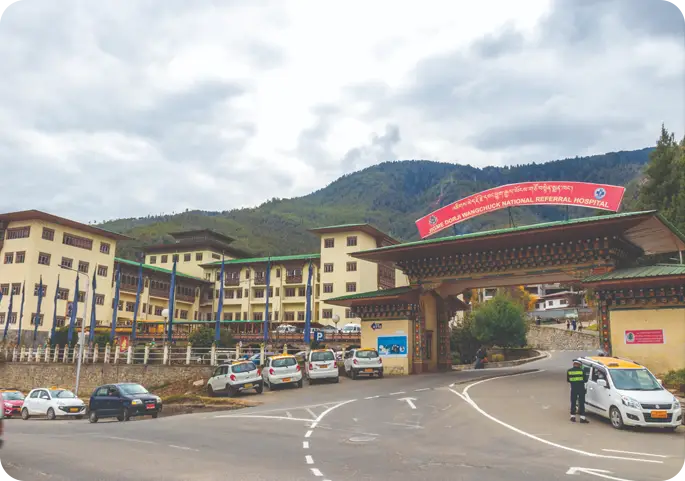
The system is structured in a three-tiered network: a wide network of Primary Health Centres (PHCs), sub-posts, and outreach clinics at the local level; district and general hospitals at the secondary level; and national and regional referral hospitals at the tertiary level.
ACCESSIBILITY:
Over 90% of the population has access to a health facility within a two-hour travel distance, despite the challenging mountainous terrain. Village Health Workers (VHWs) play a crucial role in remote communities for health promotion and basic care.
SOCIAL WELFARE
Social welfare in Bhutan is primarily guided by the GNH philosophy, which emphasizes well-being & equity over mere economic growth.
GNH AS A FRAMEWORK:
Health is one of the nine domains of the GNH Index, which is used to measure national progress and inform government policy and resource allocation.
SOCIAL PROTECTION:
Formal social insurance is mainly available to formal sector workers through schemes like the National Pension and Provident Fund (NPPF).
CIVIL SOCIETY SUPPORT:
Non-governmental organizations, such as the Bhutan Kidney Foundation and Bhutan Cancer Society, provide crucial support for patients with chronic conditions, especially those facing the indirect costs of healthcare like travel and lodging during prolonged treatment.
ARTS, CULTURE & PRESERVATION
One of the most outstanding things you will notice about Bhutan is its distinctive architecture. Carpentry plays a vital role in the construction of Bhutan’s majestic dzongs, temples, palaces, and bridges.
These masterpieces, with exquisite design and intricate details, are created by the master carpenters known as Zo Chen and Zo Wo. The ancient fortresses are some of the finest examples of woodwork in the country and are often praised for their uniqueness.
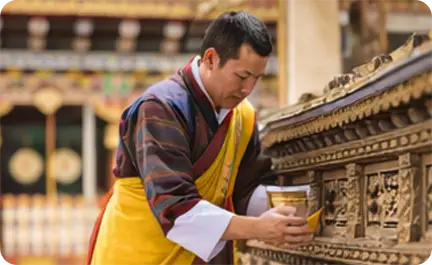
Dozo focuses on stone masonry, forming the strong foundation of sacred and historical buildings. Skilled masons carefully cut and assemble stones with remarkable precision.
These enduring stone structures provide stability to monasteries and fortresses, reflecting resilience, craftsmanship, and harmony with the natural landscape.
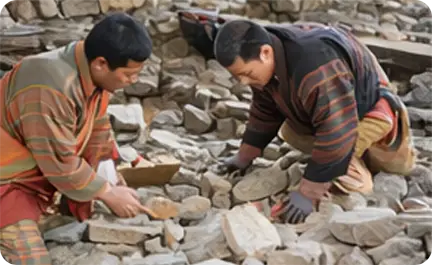
Parzo is the art of carving wood and slate into decorative panels and sacred motifs. Intricate patterns reflect religious stories and cultural identity.
Detailed carvings embellish windows, doors, and altars, enhancing spiritual spaces with symbolic depth and artistic expression.
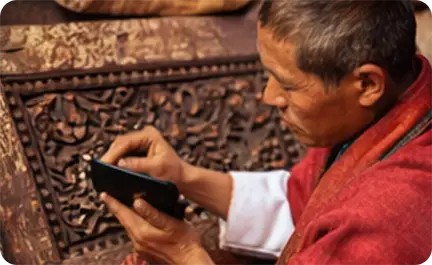
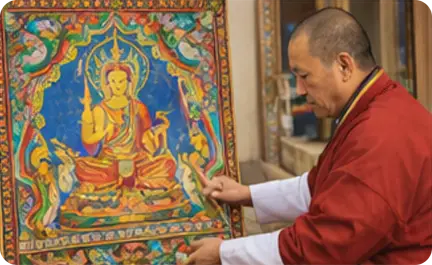
Lhazo involves traditional painting of murals, thangkas, and spiritual imagery. Artists follow sacred guidelines to ensure accuracy and devotion.
These paintings depict deities, legends, and protective symbols, preserving religious teachings through vibrant colors and refined detail.
Lhazo represents the vibrant spirit of Bhutanese cultural celebration, reflecting the deep-rooted traditions, spirituality, and community harmony of Bhutan. It symbolizes devotion, unity, and respect for heritage, often expressed through colorful attire, sacred rituals, and joyful gatherings.
Rooted in Himalayan Buddhist values, Lhazo embodies peace, gratitude, and collective identity. Through festivals, dances, and ceremonial observances, it strengthens social bonds and preserves Bhutan’s timeless customs, passing cultural wisdom from one generation to the next.
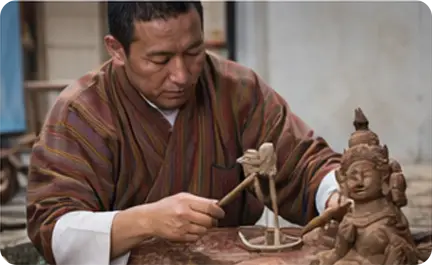
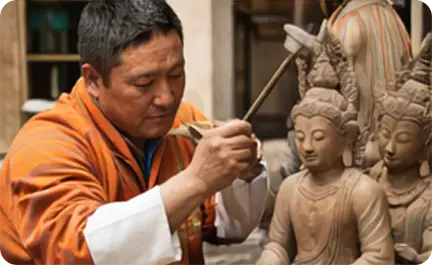
Jinzo is the craft of sculpting clay statues and sacred figures. Artisans carefully mold and paint deities used for worship.
These sculptures serve as spiritual focal points in monasteries and homes, reflecting devotion and artistic discipline.
Lugzo is the traditional Bhutanese art of metal craftsmanship, representing skill, precision, and sacred artistry. Artisans create ritual objects, swords, utensils, and symbolic items using techniques passed down through generations, preserving both functionality and spiritual significance.
Deeply connected to Bhutan’s Buddhist culture, Lugzo reflects devotion and artistic excellence. Every handcrafted piece carries cultural meaning and ceremonial value, strengthening Bhutan’s identity while sustaining the heritage of sacred metalwork traditions.
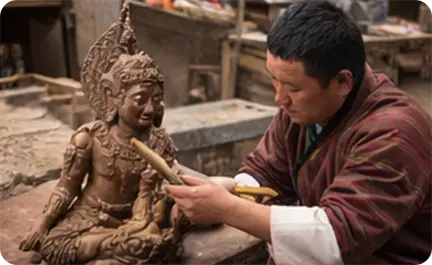
Lugzo specializes in bronze casting for ritual objects and sacred statues. Traditional methods ensure durability and spiritual authenticity.
Craftsmen create ceremonial items and intricate artifacts that support religious practices and showcase refined metal artistry.
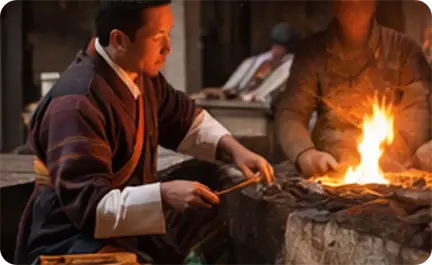
Garzo is the art of blacksmithing, producing tools, weapons, and ceremonial implements. Skilled smiths shape iron with strength and precision.
These handcrafted metal objects serve both practical and ritual purposes, sustaining daily life and cultural traditions.
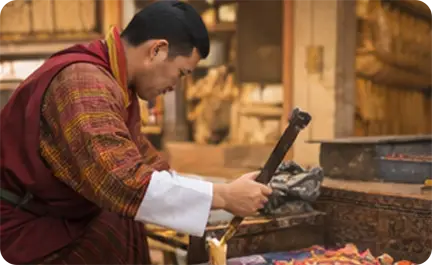
Troeko focuses on crafting decorative ornaments and jewelry using precious metals and stones. Each piece carries symbolic meaning.
These adornments are worn during ceremonies and festivals, reflecting status, identity, and artistic excellence.
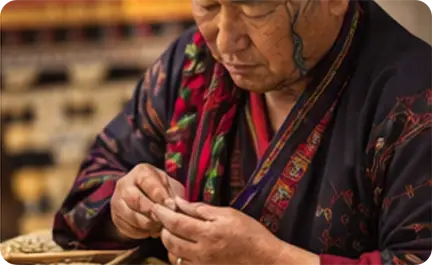
Tsharzo involves weaving cane and bamboo into baskets, mats, and containers. This eco-friendly craft supports sustainable living.
The woven products combine functionality with tradition, showcasing skill passed down through generations.
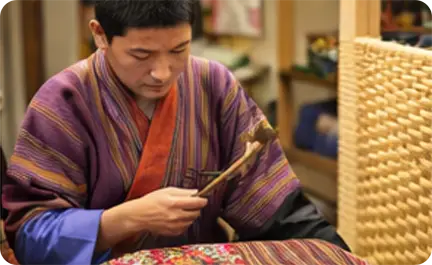
Shagzo involves shaping wood into bowls, cups, and containers using a lathe. The craft balances simplicity and precision.
These wooden items are both functional and decorative, reflecting everyday artistry rooted in tradition.
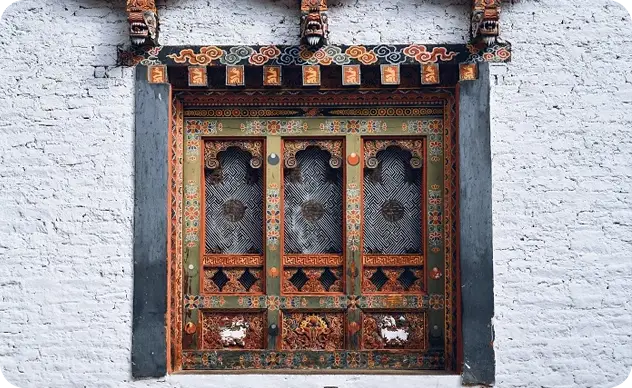
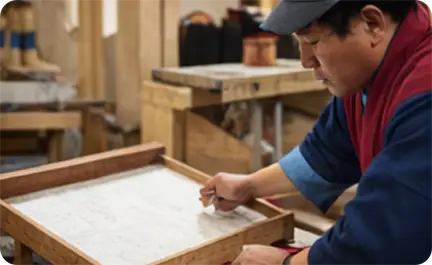
Dezo is the traditional method of handmade paper production using natural plant fibers. The process requires patience and skill.
This durable paper is used for scriptures and official documents, preserving knowledge and spiritual heritage for generations.
ECONOMIC DEVELOPMENT & INNOVATION
Bhutan’s economic development has been shaped by modernization since 1952, marked by land reforms and Five-Year Plans, including the unique Gross National Happiness (GNH) framework. This study evaluates Bhutan’s economic trajectory using indicators like GDP, living standards, education, and poverty. While GDP growth is stable, with an average rate of 4.71% (2011-2021), challenges such as rising unemployment and stagnant poverty reduction persist. Bhutan has transitioned from a Least Developed Country to a middleincome economy but remains in the transitional stage of development per Rostow’s model.
Strengthening secondary and tertiary sectors and equitable resource distribution are vital for sustainable progress.
GDP GROWTH RATE – (NSB, 2022)
GENERAL LITERACY RATE – (NSB, 2022)
LABOR FORCE PARTICIPATION RATE (NSB, 2023)
INTERNATIONAL HUMANITARIAN WORK
Bhutan’s international humanitarian work primarily involves partnerships with UN agencies and NGOs to strengthen disaster preparedness and response capabilities. Key areas of focus include building logistics and supply chain resilience against natural disasters, strengthening gender equality through programs with UN Women, and supporting the national humanitarian infrastructure. The country also receives foreign aid, with some NGOs operating there, and has an active national Red Cross society that receives support from the International Federation of Red Cross and Red Crescent Societies (IFRC).
NATIONAL HUMANITARIAN INFRASTRUCTURE
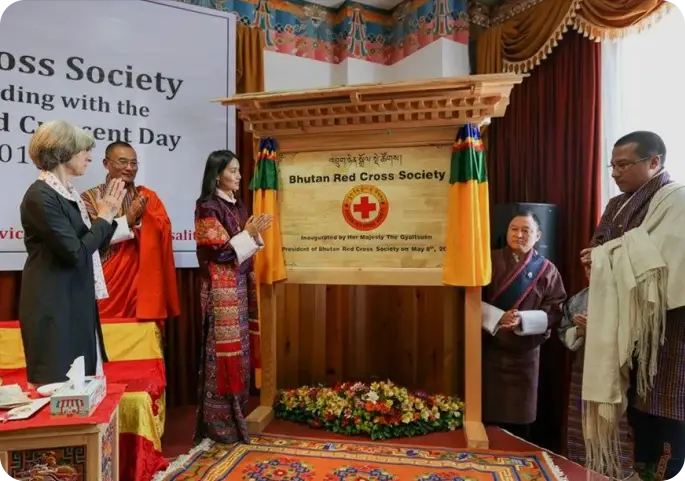
BHUTAN RED CROSS:
The Bhutan Red Cross works with the International Federation of Red Cross and Red Crescent Societies (IFRC) to develop its capacity in areas like disaster response, community resilience, and first aid.
OTHER HUMANITARIAN ACTIVITIES
FOREIGN AID:
The country has historically received foreign aid to support its development.
INTERNATIONAL NGOS:
A number of international non-governmental organizations (NGOS) operate in Bhutan, though the scope of their work can vary.